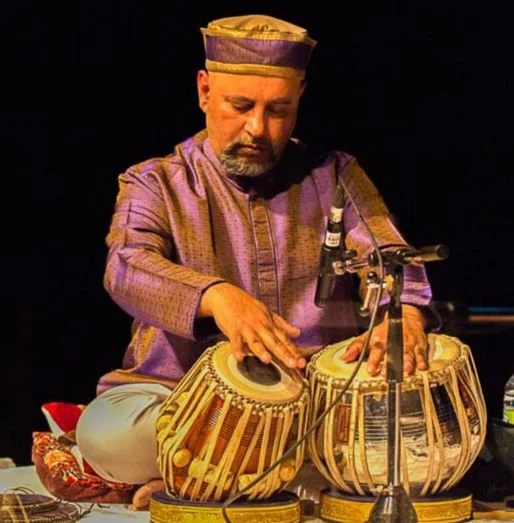
Samir Chatterjee - Director, Composer, Tabla
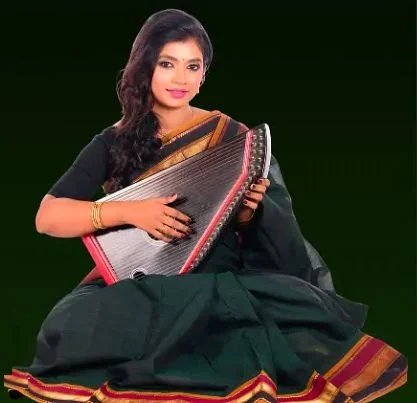
Atri Kotal - Vocal
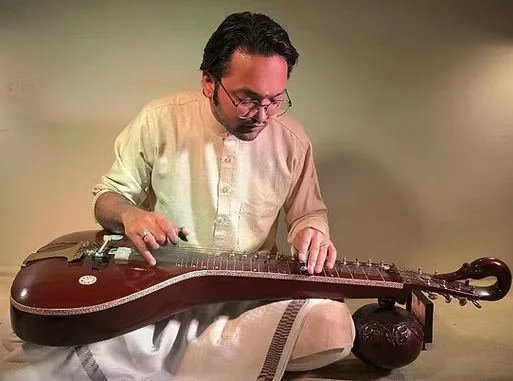
Ramanan Venkatraman - Hansaveena
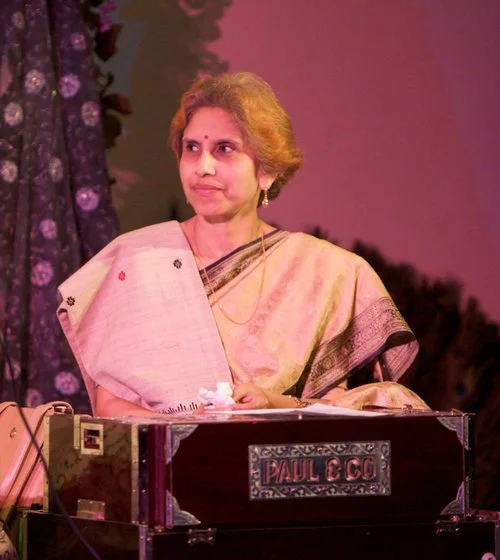
Sanghamitra Chatterjee - Vocal
Come join us at the Chhandayan Center for a unique program on the healing properties of music. This concert culminates the three-week residency on the Multi-sensory Perception of Music, supported by a grant from New York State Council on the Arts.
Admission to this concert is free to those having difficulty with living, due to cancer, other fatal diseases, disorders or decay caused by old age.
This program will also be streamed live.

Samir Chatterjee
Samir Chatterjee is a virtuoso Tabla player. He travels widely across the world throughout the year performing in numerous festivals as a soloist or with other outstanding musicians from both Indian and non-Indian musical traditions. Samir performed at the 2007 Nobel Peace Prize ceremony in Oslo, Norway. He also performed at the UN General Assembly. His compositions are widely acclaimed as well as his writings. Samir is a firm believer in the transforming effect of music on the society and all aspects of his work reflects this conviction.
Chatterjee began his studies early with Bankim Ghosh, Balaram Mukherjee, Rathin Dhar and Md. Salim. His later formation as a musician occurred under the guidance of Amalesh Chatterjee and Shyamal Bose. All of Samir's teachers have been from the Farrukhabad Gharana of Tabla-playing, which he now represents.
Samir can be heard on numerous recordings featuring as soloist, accompanying many of India's greatest musicians and in collaboration with western musicians of outstanding caliber. In concert Samir has accompanied many of India's greatest musicians including Ravi Shankar, Vilayat Khan, Bhimsen Joshi, Pandit Jasraj, Nikhil Banerjee, V.G. Jog, Shivkumar Sharma, Hariprasad Chaurasia, M. S. Gopalakrishnan, Amjad Ali Khan, Salamat Ali Khan, Lakshmi Shankar, L. Subramanium, U Srinivas, Shujaat Khan, Shahid Parvez, Ajoy Chakraborty, Rashid Khan, Kaushiki Chakraborty, to name only a few.
Samir Chatterjee has been a catalyst in the fusion of Indian and Non-Indian music, in his own creations and others as well. He has performed with Pauline Oliveros, William Parker, Branford Marsalis, Ravi Coltrane, Joshua Bell, David Liebman, Ned Rothenberg, Mark Dresser, Dance Theater of Harlem, Boston Philharmonic, Minnesota Orchestra, and other jazz, classical and Avant guard musicians and ensembles. He also collaborates with Sufi-Rock singer Salman Ahmad of Junoon from Pakistan. He is the composer and director of Tablaphilia, Indo-Flame, Chhand-Anand, RabiThakur, Meghadootam, and Dawn to Dusk and Beyond. He performs with Sanjay Mishra on his CD "Blue Incantation" featuring Jerry Garcia as guest artist.
Chatterjee has been teaching for the last 50 years. Many of his students are established performers. He is the founding president of Chhandayan. He has authored books titled A Study of Tabla, Music of India and Those Forty Days. He has taught at the Manhattan School of Music, Univ. of Pittsburgh, New School for Jazz and Contemporary Music, Yale University, NYU, among many other major institutions in the USA, Europe and India. He has master's degrees in English and History.
Samir made significant contributions towards the musical revival of Afghanistan since 2008. He has received several awards including Sunshine Caribbean Award in 2016, Jadu Bhatta Award from Salt Lake Music Conference, Acharya Varistha Award from Pandit Jasraj Institute, Taal Mani Award from Council of Indian Classical Music, Delhi in 2018, and the Lifetime Achievement Award from SMIPAC Trust, Delhi in 2018.
Atri Kotal
Atri Kotal initially trained under Late Pt. Biresh Roy, Ustad Jainul Abedin, Pt Ajoy Chakraborty. Currently she is under the guidance of Shri Deborshee Bhattacharjee & Padmashree Shubha Mudghal ji, Atri is a National Scholar from Ministry of Culture, Govt of India, a graded artist of All-India Radio.
Born and brought up in Kolkata and now residing in Mumbai, Maharashtra. She has performed worldwide. In India she has performed at the prestigious Dover Lane Music Conference (69th edition), VSK Baithak Delhi, Banyan Tree events Mumbai, Khazana Festival Mumbai to name a few. And in the USA, she performed in Arts from India, New York, Radha Raman Vedic Temple, Brea, California, Arizona State University, to name a few. She has received prestigious awards like Girija Devi Vises Kalakar Puraskar from Padmavibhushan Girija Devi herself, Sangeet Natak Academy Scholarship in the name of Begum Akhtar ji, Best Hindustani under Consumer Traditional category in IMA Indian Music Awards and Khazana Ghazal Talent hunt award from Padmashree Anup Jalota and Padmashree Peenaz Masani to name a few. Dedicated to perpetuating the rich legacy of Hindustani Classical vocal music, she has undergone rigorous training in the esteemed Kirana, Agra, and Patiala gharanas. Her expertise extends to a vast repertoire of Purab ang gayaki, encompassing Thumri, Dadra, and allied forms, showcasing her versatility and depth in this traditional art form.
She is also working towards spreading the rich cultural heritage of Indian Classical music among youth. She works as a visiting faculty and examiner of Indian Music at NMIMS, School of Performing Arts & School of Economics, Mumbai and multiple other private
schools and colleges in India. She also has her own 7-piece classical fusion ensemble named Survana whose purpose is to make Indian classical music more accessible for today’s world blending with modern sound.
Ramanan Venkatraman
After a brief moment of founding Sadhana School of Music, Dance and Arts, Ramanan started getting fascinated by the sound and beauty of the Sitar. This happened due to the collaboration with Radhika Samson (Sitar Player) & Pranav Ramji (Tabla). Trying to explore the aesthetics and mechanics of a Sitar, the interest and love for Indian Classical Music started to grow back in Ramanan. Occasionally trying to play the Sitar, he figured that the various things and techniques he would try to use to play something in the style of Classical Music, could be done in instances on a Classical Instrument like the sitar. Getting inspired by the amount of knowledge and skill a classical musician possess, he decided to start learning. Radhika, gave him the path to his Guru by inviting him to a concert Guruji was supposed to play in the Aurobindo Ashram. Until then, Ramanan had only heard how beautiful the sound of a Hansaveena is and the make of it is pure hard work and has wonderful aesthetics. The guy who made it is playing etc. but never had seen one in reality or heard it.
"If 'floored to the lowest level possible' is a quote to say, that I was astound and drooling over the sound of the instrument and the various techniques Guruji was playing with, then Floored I was. Not a single day goes by when I can't remember how it was to me, I believe that is what is keeping the drive in me to go ahead with this." says Ramanan.
Shortly after the performance got over and everyone was approaching Guruji, so did Ramanan requesting him to teach him his instrument. Guruji being the most humble man to be alive and the most earthed person, says to him "How can I teach you anything? You should be the one teaching me, tell me when to come.". Shattered by the thought of guilt and shamed by the thought of pride about everything he had achieved, Ramanan couldn't speak a word. He says, "I didn't realise at that instant, what he has trying to do. Later I realised that he was actually trying to help me get over my pride of being a self taught musician and the things I've done. I felt miserable and understood how a True Musician should be. Humility is what takes us to the next level, not Pride. He taught me that.". Pursuing Guruji constantly for almost a couple of months and occasionally requesting him to teach him, every time he met Guruji.
Finally on the 12th of July, 2014, the auspicious day of Guru Poornima, Guruji took Ramanan to Bharat Ratna Pandit Ravi Shankar's Institute of Music and Performing Arts (RIMPA). Under the mesmerising photograph of the Great Pandit Ravi Shankar, he was taught his first pranaams to the divine Guru by chanting Guru Vandana. Being a part of such a wonderful legacy and the ideals and ideas of these great human beings who had achieved so much because of hard work and knowledge, Ramanan decided to devote everything for it. He slowly started realising the humungous amount of hard work that has been put behind the greatness of the Hansaveena. He says, "An irresistible love and respect came for Guruji and I swore to myself to be the one to ensure that his hard work will be showcased in the best and most appropriate manner to this world when my time comes. Having spent hours and hours of time with my instrument, I still have many avenues to touch and get better at, however, the avenues does not seem to end. There is more and more and more all the time. It is not about competition but the way this instrument is designed, everything that a human requires to bring his emotions out in front of people through sound is available and with great ease. How is that even possible?"
Ramanan was a senior disciple of Pandit Barun Kumar Pal (Guruji) and trained in the true Guru Shishya Parampara. On many occasions he has given various performances with the guidance and love from Guruji. The style of playing would mostly be termed as the Senia Maihar Gharana Style, however, Ramanan says that mostly it is Guruji's style, which includes everything from the Gharana without fail, but it also has a touch of his musical sense in such a way that it sounds like a completely different world and side of music altogether.
Sanghamitra Chatterjee
Sanghamitra Chatterjee is a versatile singer of a wide variety of Indian songs from different genres. Her array of repertoire includes Bhajan, Ghazal, Dadra, film songs, Rabindra Sangeet (songs of Tagore), Adhunik (modern) Bengali songs, Nazrulgeeti and different types of folk and regional songs in different languages.
She had her lessons in classical singing from Pdt. Usharanjan Mukherjee and Sri Dashu Mukherjee. In non-classical music her training has been under Jatileshwar Mukherjee, Ajoy Das, Prasanta Chowdhury, Nikhil Chatterjee and others. She is an upgraded artist of the national radio and television of India. Her proficiency in Tagore songs has earned her the Sangeet Sudhakar diploma.
Sanghamitra's singing is characterized by high aesthetic quality and technical brilliance. Her sensible scanning of lyric with rendered with her original touches of embellishments, her highly sensitive and involved presentation not only brings out the inner essence of the songs she presents, but also adds a new dimension to their emotional contents. Her voice is gifted with a natural mellifluous quality which inevitably touches her audience. Much of her musical sensibilities have developed under the guidance and influence of her illustrious husband Samir Chatterjee, a musician of outstanding caliber and repute.
Sanghamitra Chatterjee is not only known for her excellence as a solo performer, she has also contributed to several groups such as the Chhandayan ensemble in their productions of Indo-Flame and Nacho-Nacho (blend of Indian and Flamenco dance and music), Dawn to Dusk and Beyond and World Percussion Ensemble; with the Battery Dance Co. of NY in production of Songs of Tagore; with the Kathak Ensemble of NY in Ka-Tap (Kathak and Tap dancing), with Ethos Percussions in Masters of Indian Music series. She has performed in many important places and festivals in the United States such as the Smithsonian Institute, Columbia University, American Museum of Natural History in New York and Washington, DC, Symphony Space in NYC, Wortham Center in Houston, Lotus Music and Dance, Kansas University, Monadnock Festival in Peterborough, New Hampshire, Sun Valley in Idaho, University of South Florida in Tampa etc. Apart from her homeland India and the United States she has also performed in Sri Lanka, Poland, The Bahamas and Kazakhstan.