
Now that Chhandayan has its own concert venue, we will be presenting several All-night Concerts each year at CCIM in New York. These give the opportunity to hear some unusual late night and early morning ragas that are not often heard in the evening and afternoon time slots. The second of these will be held May 29-30, 2027. As we get closer to the event, we will finalize the performances. Check the website for updates.
The event will also be streamed live.
Program:
Raghunandan Pansikar - vocal,
Bharat Kamat - Tabla
Ameya Bichu - HarmoniumVocal/Sitar Duet
Debapriya Adhikari (vocal)
Samanya Sarkar (sitar)
Indranil Mallick on TablaTabla Trio
Tejas Tope
Aditya Phatak
Manav Khurana

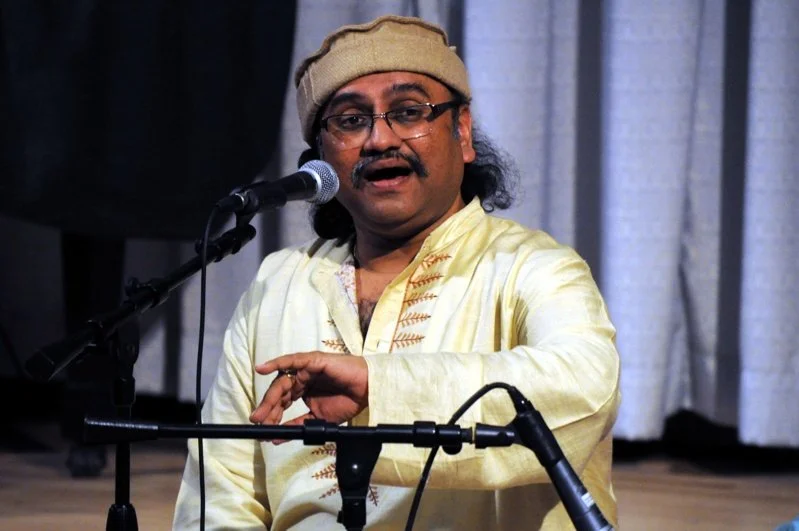
Raghunandan Panshikar
Raghunandan Panshikar is an Indian Hindustani classical vocalist trained in the Jaipur-Atrauli gharana under Kishori Amonkar and Mogubai Kurdikar. Known for blending tradition with a distinct personal style, he is acclaimed for both classical and semi-classical genres like bhajans, thumris, ghazals, and Natya Sangeet. A recipient of awards including the Manik Varma Puraskar and Dr. Prabha Atre Award, he has performed widely in India and internationally, and composed award-winning Marathi theatre music.
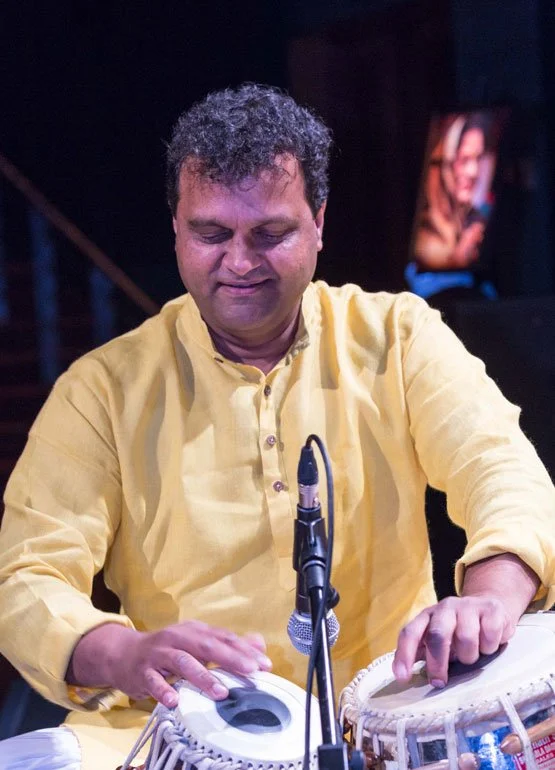
Bharat Kamat
Bharat Kamat is a Hindustani classical tabla player of the Benares Tabla Gharana. Kamat is born and brought up from Pune, India, and is one of the leading tabla artists of India today. At the age of five, Bharat started learning tabla from his father Pt. Chandrakant Kamat, who was a disciple of Pt. Samata Prasad of the Benares gharana. Bharat's grandfather, Pt. Shantaram Kamat, was a renowned stage-music artist. He did his schooling in NMV High School in Pune and was part of Swaranjali Systems. During his initial days, he played tabla with many Kirtankars (the people who sing Kirtan).
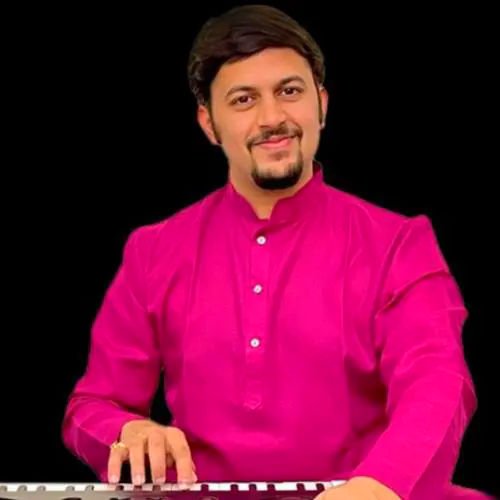
Ameya Bichu
Ameya is an emerging harmonium artist who has received systematic training from Shri Tanmay Deochake, Pt. Suresh Talwalkar, and Vidushi Padma Talwalkar. He has built a strong presence as an accompanist and has performed at concert venues across India as well as in the United States. His work has been recognized with several honors, including the Pt. Ram Marathe Award.
Debapriya Adikhary
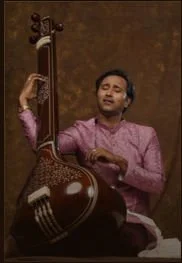
Born in the industrial township of Sindri, Jharkhand , into a humble and educated Bengali family, Debapriya displayed a natural affinity for the arts from an early age. His introduction to music did not begin through formal lessons, but through the quiet, immersive world of listening to his mother, Anita Adhikary , sing and practise at home. A disciple of Pt. Jivnath Jha, affectionately known as Taanraj, she became his very first source of musical inspiration.
Recognizing her son’s innate sensitivity towards music, she introduced him to Pt. Samaresh Chawdhury of the Senia and Maihar gharanas, who later accepted Debapriya as his Gandabandh disciple. From the age of eight, Debapriya underwent rigorous training under his guidance for fourteen formative years. Throughout this journey, his mother travelled tirelessly between Sindri and Durgapur, never allowing weather, festivals, or circumstance to interrupt his learning — a quiet testament to her unwavering dedication and belief in her son’s path.
Under the guidance of Pt. Samaresh Chawdhury, Debapriya cultivated a profound understanding of voice culture, tonal smoothness, and the clarity required to render intricate musical movements with grace and precision. These formative years laid the foundation for the artistic identity that would gradually unfold in the years to come. Yet his training extended far beyond technique alone. It was an education in discipline, patience, humility, and the art of deep listening — values that became inseparable from his music and personality alike.
Debapriya’s musical journey found deeper expression under the legendary Padma Vibhushan awardee Dr. Girija Devi of the Benaras gharana, with whom he trained as a Gandabandh disciple for eleven transformative years. Under her affectionate yet rigorous guidance, he immersed himself in the rich expressive traditions of Thumri, Tappa, Tap-Thumri, Dadra, Kajri, and Jhula, while also absorbing rare compositions and the distinctive khayal gayaki of Benaras. More than repertoire alone, Dr. Girija Devi shaped his artistic vision with emotional depth, inner strength, and an understanding that music must transcend the boundaries of notes and words.
Through her teachings, he learned to approach music not merely as performance, but as a living expression of experience, devotion, and humanity. He also received guidance from Pt. Kumar Prasad Mukherjee of the Agra and Rampur-Sahaswan traditions, and from Pt. Vijay Kichlu of the Agra gharana, who entrusted him with numerous rare bandishes and a deeply refined understanding of the technical and aesthetic beauty of ragas. A torchbearer of the Senia-Banaras tradition, Debapriya Adhikary’s music is marked by a rare balance of tradition and innovation. More than three decades of rigorous training have shaped a style distinguished by clarity, emotional depth, and technical finesse. His command over gamaks, intricate taans, meends, and swargam has earned him admiration from audiences and connoisseurs across the world.
An A-Grade Artist of All India Radio, as well as a recipient of the National Film Award and the President’s Award, he represents a unique confluence of scholarship, performance, and creative vision. He holds a Master’s degree in Music and was awarded the Junior Research Fellowship by the Ministry of Culture, Government of India, for his research on the history of Thumri and the contribution of Girija Devi. Continuing his lifelong pursuit of musical refinement, he is presently training under Pt. Uday Bhawalkar, immersing himself in the profound nuances of Dhrupad.
Samanwaya Sarkar
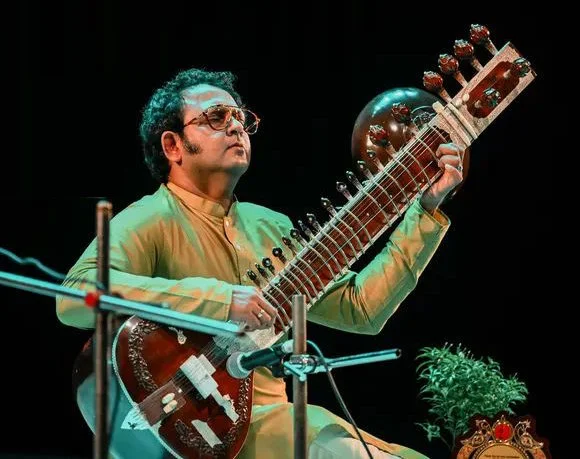
Samanwaya Sarkar is a sitarist and a Surbahar player shaped by classical training and years of dedicated practice. He has received international recognition as the first Indian classical musician to receive the Bravo International Award (Moscow), and national honours including the National Award and President’s Award. Graded A by All India Radio and Doordarshan (2006), his music combines deep lineage with a reflective, attentive approach to raag.
Samanwaya began his training with Pt. Sasanka Bandopadhyaya of the Senia Gharana, continuing with Pt. Manilal Nag, Pt. Shyamal Chatterjee, and Pt. Kumar Prasad Mukherjee, exploring the Senia Maihar, Bishnupur, and Agra Atrauli traditions. Under Padma Vibhushan Girija Devi, he studied vocal forms including khayal, thumri, tappa, and tapp khayal integrating their phrasing and subtlety into his sitar playing.
Behind each chapter of his artistic and personal growth stands his father, Sri Swapan Kumar Sarkar- a disciple of Sri Lalit Mohan Sanyal, senior student of Ustad Bade Ghulam Ali Khan - whose guidance shaped his path in music, arts, and sports alike.
He has performed across India at various prestigious festivals such as Virasat (Dehradun), Classical Music Conference 2026 ( West Bengal State Academy for Music and Dance), Komal Nishad (Baroda), LNG Bhilwara, Malhar Festival (ITC Sangeet Research Academy), GuruGram Festival, Bishnupur Festival, Kalidas Samaroh (Nagpur), Sawai Gandharva, Saptak, Swar Mangesh and Swar Samrat, as well as internationally at venues such as Elbphilharmonie (Germany), Théâtre de la Ville (Paris), WOMAD (UK), the Sitar Festival (Russia), and Sharq Taronalari (Uzbekistan), where he was recognised by UNESCO.
Beyond performance, Samanwaya co-directed the National Award- winning documentary Girija: A Lifetime in Music and has released the albums IRIDESCENT (Ragaranga, USA) and SAMVAAD (Times Music), focusing on careful, attentive raag development and rhythm.
Indranil Mallick
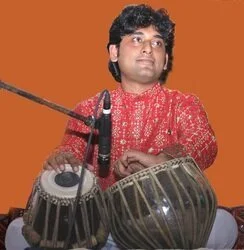
Indranil Mallick, a promising tabla player of rare skill, has already established himself both as a soloist and accompanist. Born to a family of genuine music connoisseurs, he received his initial training in tabla when he was only five from his uncle, Sri Montu Mallick. Later he was trained by Prof. Dhabol Bandyapadhaya.From 1985 he was under the guidance of Sri Uttam Chakraborty, senior disciple of Pandit Swapan Chaudhuri.Now he is under the guidance of Pt. Swapan Chaudhuri . Indranil belongs to Luckhnow Gharana style of tabla.
Among his numerous awards and distinctions in tabla performance he stood first in the Yuva Utsav organized by the state Government of West Bengal. In 1997 he stood first in the prestigious Dover Lane Music Competition and earned "The Best Talent Of The Year" for 1996-97, trophy awarded by the H.M.V Music Corporation. Indranil holds a "Sangeet Visarad", Bachelor of Arts Degree in Music focused on tabla, from the University of Chandigarh, which he earned in 1999.He also earned " Sangeet Kala Ratna" in the year 2006.
Keeping a rigorous performance schedule, Indranil continues to perform with renowned artists in various music conferences in India and abroad. Some of these are The Dover Lane Music Conference in Kolkata, West Bengal State Music Academy Annual Convocation Concert, "The GolPark Rama Krishna Mission" Kolkata, Annual Conference of Spicmacay in AgartalaSangeet Gana Sabha in Visaka Pattanam, Spicmacay tour in Madhya Pradesh, Dadar Matunga Music conference, Mumbai (A Hundred years music organisatin), Baba Alauddin Khan Sangeet Samaraho, Maihar,Santipur Sangeet Sammelan, Kolkata, Nabarang Sangeet Sammelan, Kolkata, Kerala Music Festival, Music Festival in Patna and others….
In 2002 Indranil began international touring with performances in Europe, USA, Canada, UK, Germany, Switzerland , Ukraine , Estonia, Russia, Austria and Holland. During these tours he represented India in many world renowned festivals. Some examples include the Open Baroque Festival in Estonia, The Musica Sacra International Festival in Germany, and the International Jazz and Blues festival in Austria.
Indranil is a grade 'A' artist of All India Radio, Kolkata where he is featured regularly on programs aired throughout India. He holds a Master Degree in Economics from Rabindra Bharati University, Kolkata.
Tejas Tope
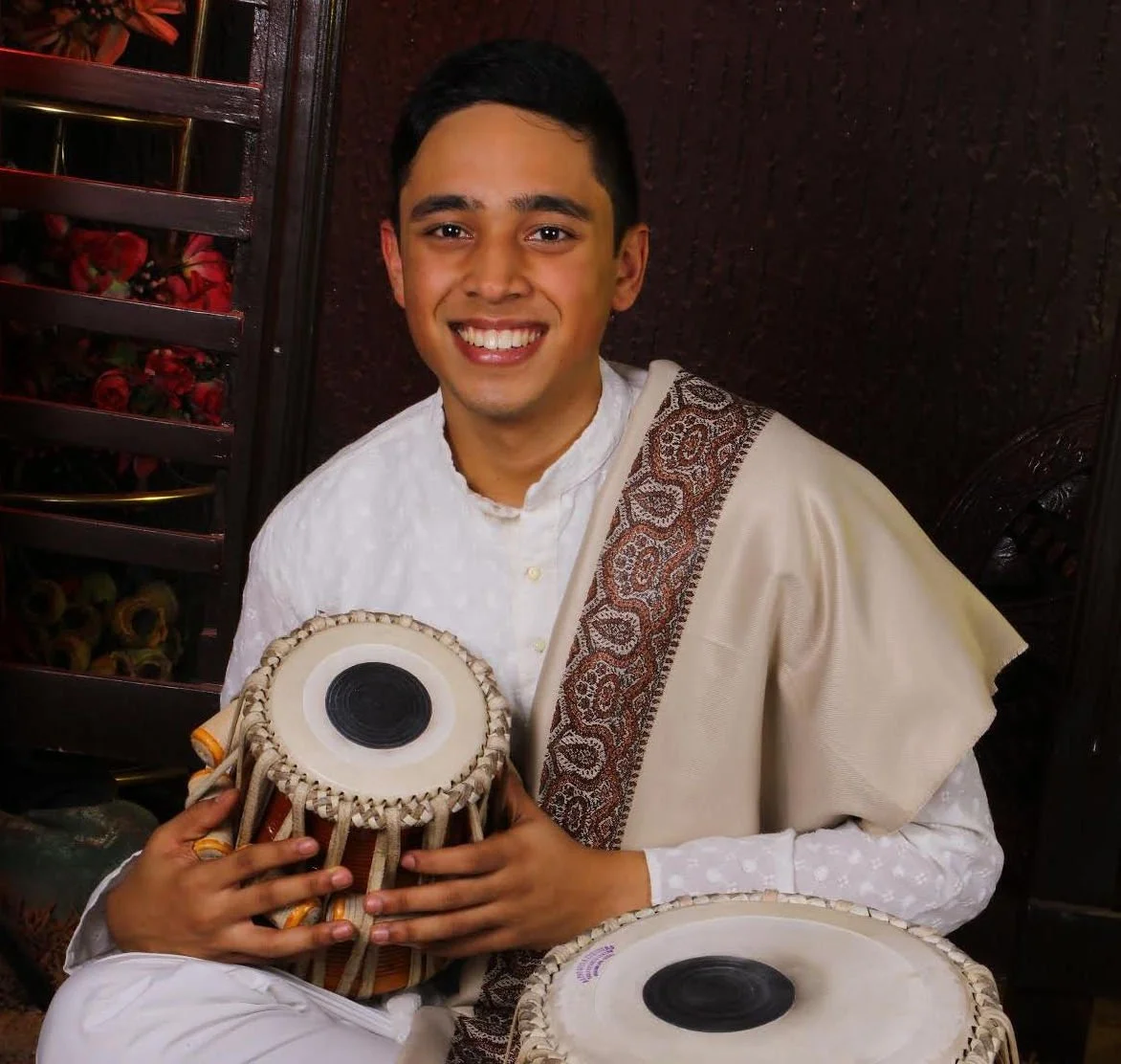
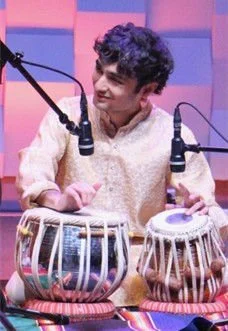
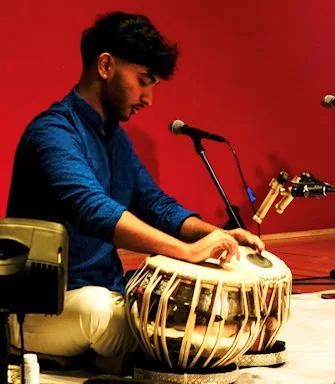
Tejas Tope has been learning tabla from Pt. Samir Chatterjee for over 20 years, and has additionally taken training under Ud. Zakir Hussain for 15 years. Tejas has performed globally, as a soloist and highly sought-after accompanist. Tejas Tope has also studies Pakhawaj under Pt. Mohan Shyam Sharma, Pt. Manik Munde and Shri Pratap Awad.
Aditya Phatak
A highly sought-after performer of tabla, Scotch Plains native Aditya was initially inspired by his grandfather Deepak Phatak and guided by his uncle Shivraj Phatak. For more than fifteen years, Aditya has been developing his tabla under the loving mentorship of Pt. Samir Chatterjee. Over that time, Aditya has performed at prestigious venues like Carnegie Hall, The Metropolitan Museum of Art, the Woodstock Drum Boogie Festival, and the BRM "Ragas Live" festival. Notably, Aditya's tabla was featured in the Grammy-nominated song “Abundance in Millets”, commissioned by Honorable Prime Minister Narendra Modi and written by Indian-American singer-songwriters Falu and Gaurav Shah. Aditya is also an accomplished jazz drummer and Hindustani vocalist, having studied Hindustani Classical vocal music with Smt. Rucha Jambhekar, and more recently, under the guidance of Shri Kiran Lele. Aside from music, Aditya is a senior at Columbia University studying Applied Mathematics and Computer Science.
Manav Khurana
Manav Khurana is a talented young tabla player from the Farrukhabad Gharana. His musical inclination became apparent at an early age, and his parents encouraged him to learn Dholak, Piano, and other instruments. As a teenager, he was initiated into the world of tabla by his dholak Guru Shri Roger Sookraj. He continued his study of tabla under Shri Kumar Raj Gandharva and Sabir Hussain of the Punjab Gharana. Subsequently, he began his serious training with Shri Dibyarka Chatterjee at the age of 14. In 2023 he became an initiated disciple (shishya) of tabla maestro Pandit Samir Chatterjee. Manav has already performed with some notable performers of Indian Classical Music including Pandit Sugato Nag, Shri Biplap Mukherjee, Pandit Hindol Chattopadhyay, Vidushi Shahana Banerjee and his Guru Pandit Samir Chatterjee. Outside of music, he is currently pursuing his Bachelor’s degree in Finance.